MISS Adoption Ladder
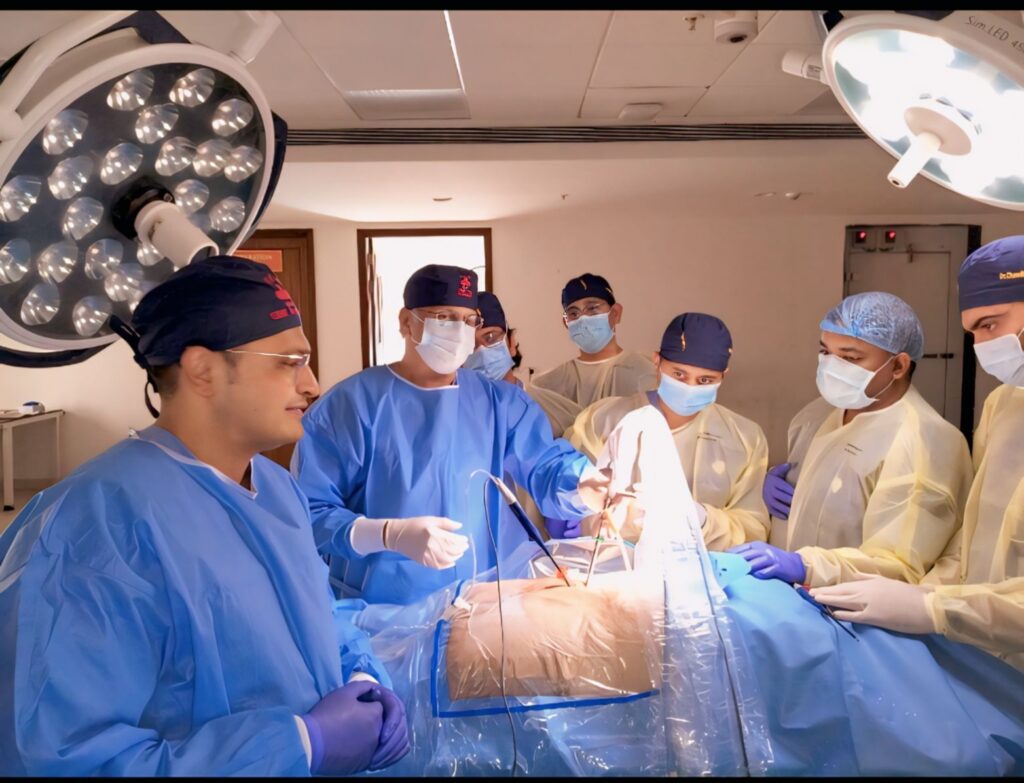
Recognizing that every surgeon possesses a unique clinical philosophy, level of experience, and professional objective, the UpskillCAD Foundation provides a personalized framework for technical mastery. Our program is specifically designed to ensure the successful adoption of MISS techniques and procedures by honoring individual surgical styles while introducing advanced technological workflows.
UPSKILL PROBLEM BASED LEARNING
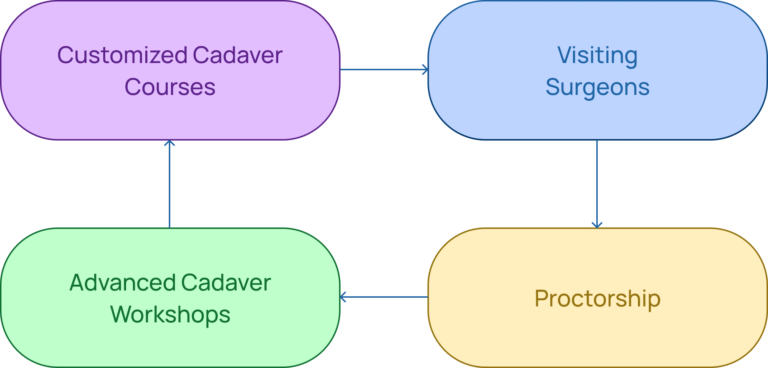
By aligning our modular, evidence-based training with your specific practice goals, we facilitate a seamless transition into endoscopic and tubular interventions. This tailored approach acknowledges that surgeons start from different levels, allowing for a learning curve that is both clinically intuitive and strategically paced. Ultimately, UpskillCAD empowers you to evolve your practice, optimizing operative efficiency and achieving superior patient outcomes.
Endoscopy Procedures
1. Core Endoscopic Approaches
The foundation of endoscopic spine surgery rests on two primary corridors. Understanding the anatomy of these "safe zones" is the first step in upskilling.
Transforaminal Approach
Used primarily for lumbar disc herniations. The endoscope enters through the neuroforamen, utilizing Kambin’s Triangle—a safe zone bordered by the exiting nerve root, the traversing nerve root, and the superior border of the lower vertebra.
Interlaminar Approach
More familiar to surgeons accustomed to traditional microdiscectomy. It accesses the spinal canal through the interlaminar window, making it ideal for L5-S1 levels where the iliac crest might block a transforaminal path.
2. Advanced Endoscopic Procedures
As surgeons progress, the scope of endoscopy expands from simple discectomy to complex decompression.
Endoscopic Rhizotomy
A targeted procedure to denervate the facet joints for chronic back pain. It offers direct visualization of the nerves, unlike percutaneous radiofrequency ablation.
Endoscopic Lateral Recess Decompression
Used for spinal stenosis. It involves "over-the-top" bone resection to decompress the contralateral side through a single unilateral portal.
Endoscopic Lumbar Interbody Fusion (Endo-LIF)
The frontier of FESS. It involves performing a complete discectomy, endplate preparation, and cage insertion entirely through an endoscopic working channel.
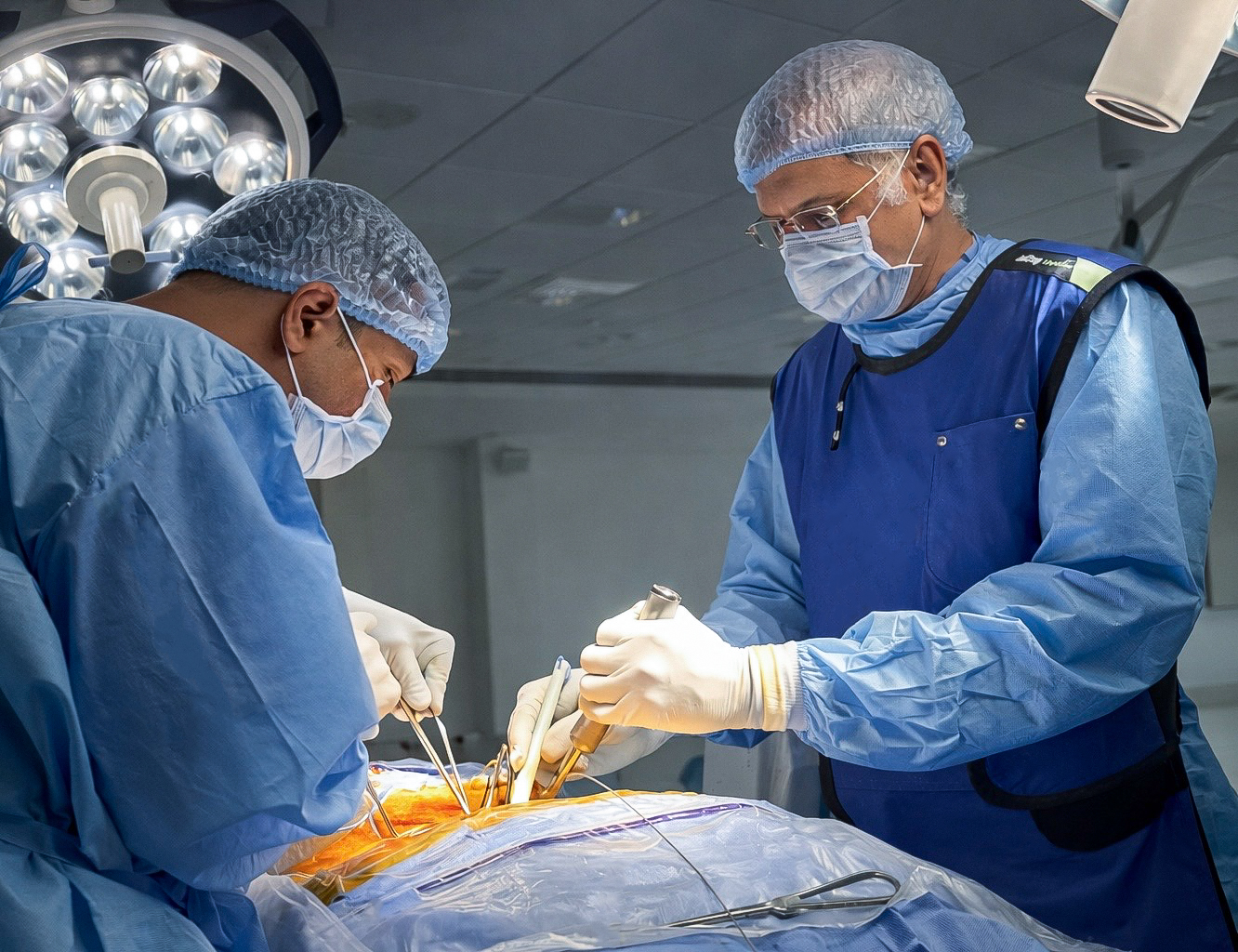
3. The Technical Skill Set (The "Upskill" Focus)
For a foundation like upskillCAD, the emphasis should be on the hand-eye coordination and triangulation unique to this field.
Fluid Management
In endoscopy, the surgeon must manage irrigation pressure. Proper flow is required to maintain a clear field of view (hemostasis) and to prevent increased intracranial pressure or neck swelling in cervical cases.
|
Features
|
Microsurgery
|
Endoscopic Surgery
|
|---|---|---|
|
Visualization
|
3D through Microscope
|
2D High-Definition Monitor
|
|
Medium
|
Air
|
Continuous Saline Irrigation
|
|
Tactile Feedback
|
Direct
|
Leveraged through long instruments
|
|
Working Channel
|
Separate from visualization
|
Integrated (Single-portal)
|
4. Essential Instrumentation
Upskilling requires familiarity with the "Endoscopic Tower" and specialized tools:
The Optic
Usually 25° or 30° angles to allow for "looking around corners.
Radiofrequency (RF) Probes
Essential for shrinkage of the annuloplasty and precise hemostasis in a fluid environment.
High-Speed Endoscopic Burs
Used for laminotomy and foraminoplasty under continuous irrigation.